Minimum CIBIL Score for Personal Loan Approval in India (2026 Guide)
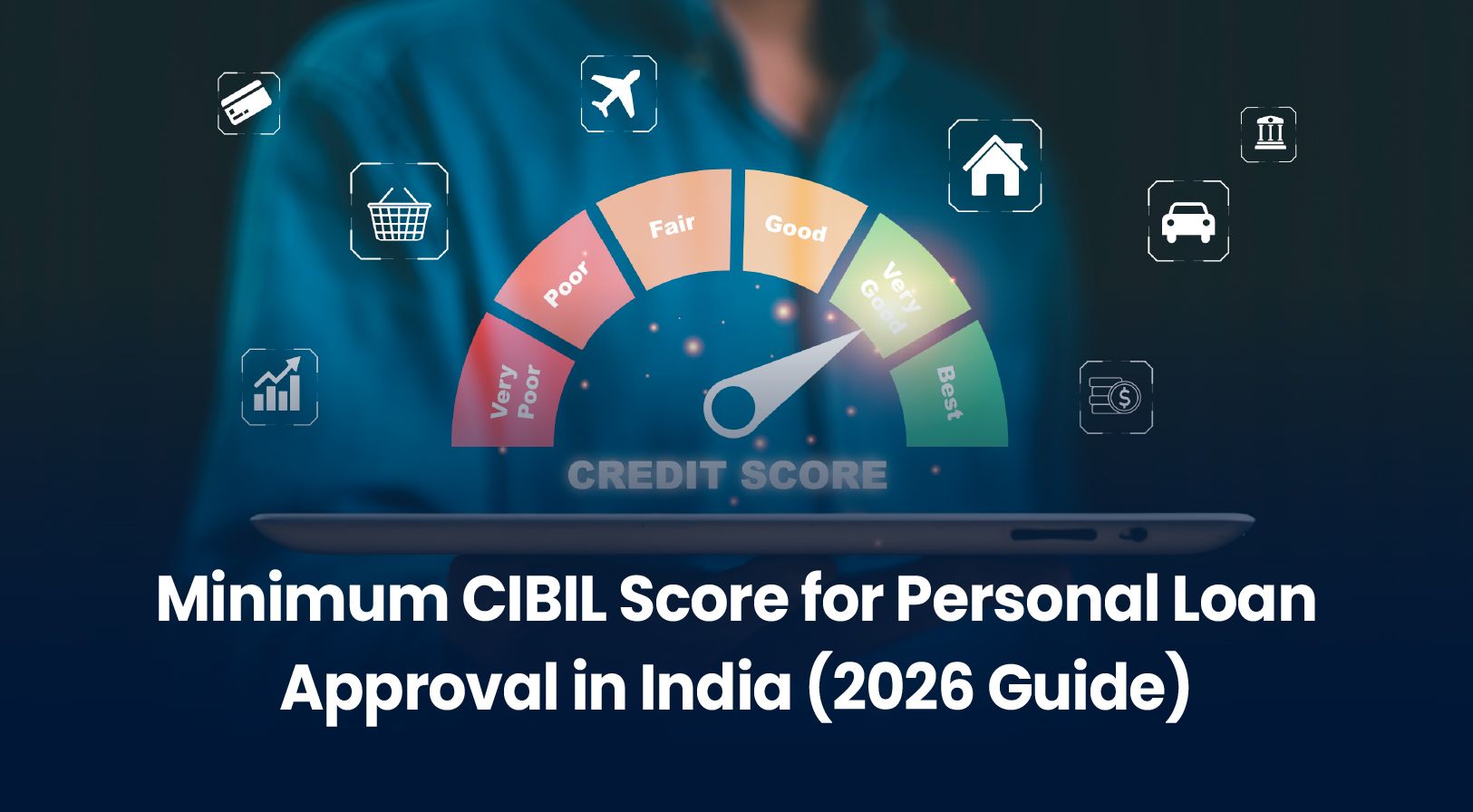
A personal loan is really fast and easy to get in India. Lots of people apply for loans every year. They use these loans for all sorts of things like bills, trips, education, paying off other debts or buying something big. People like loans because they can get the money quickly. This is helpful when they need it for something like medical care or a big purchase. Personal loans are popular, in India. Many people use them to borrow money when they need it.
But before lenders will approve a loan, there’s one thing that they will take a peek at immediately, and it would be your CIBIL score. It serves as your financial report card, representing how responsible you have been in terms of your credit management in the past.
We took a look at the 2026 personal loan guide. This guide will tell you what your CIBIL score should be to get a loan. It will also show you how lenders look at you when you apply for a loan. The personal loan guide will even tell you how to get a loan when you have a low CIBIL score.
If you are borrowing money for the time or if you already have a personal loan or credit history this personal loan guide is for you. This guide will help you understand if you are eligible, for a loan or not.
1. What Is the Minimum CIBIL Score for a Personal Loan in India ?
Most Banks and NBFCs in India prefer a CIBIL score of 700 or more for easy personal loan approval. However, there are different score ranges that make you eligible to:
Ranges of CIBIL Score & Chances of Approval
750-900 (Excellent):
Best possible bracket. Approvals are quick, interest rates are the lowest, and you get the option to avail higher loan amounts with flexible tenures.
700-749 (Good):
Strong chances of approval. You may get slightly higher interest rates in the highest bracket, but still favourable terms.
650-699 (Average):
Approval can be, but is not assured. Lenders may require additional documents, offer lower amounts of loans, or increase the interest rate.
600-649 (Below Average):
Many banks can reject, but there may be NBFCs or fintechs that will consider your application in case of good income and job stability.
Below 600 (Poor):
Approval of loans becomes very hard. A few high-risk lenders will make very small-ticket loans, though the interest rate may be higher or the other conditions may be more stringent.
2. Is CIBIL Score Mandatory in a Personal Loan? (New Updates for 2026)
A major shift in the lending ecosystem in India is the fact that CIBIL score is no longer the only deciding factor. Regulators also have told lenders not to turn down first-time borrowers just because they do not have a credit history.
This is important because:
- Many people who are on wages and young adults who take their first loan do not have any previous record of credit.
- A “No History” profile (NA or NH score) is not considered to be treated negatively.
- Lenders now go more in-depth to check income stability, employer type, and banking patterns for such borrowers.
While a good CIBIL score is still a high advantage, lack of a score will not automatically disqualify you.
3. Why CIBIL Score is so Important for Personal Loan
Personal loans are unsecured loans, which means that you do not pledge any collateral such as gold, property or deposits. Because the lenders are at higher risk, they depend a lot on your CIBIL score to know your discipline of credit.
Your CIBIL score indicates:
- The track record of your repayment (late or punctual payments)
- Your behavior with the credit utilization
- Number of loans you have, number of cards you have
- How frequent your requests for credit
- Any defaults or settlements you have experienced in your past
- Years of credit history directly refer to the number of years you have had a credit history.
Since the lender cannot seize an asset in case of non-payment, he or she needs a good indicator of how reliable you are financially – and this is exactly what the CIBIL score reflects.
4. Minimum CIBIL Score: What Different Lenders are Looking for
While 700+ is the preferred band, all kinds of lenders treat credit scores differently:
Banks (Public & Private)
- Very strict regarding CIBIL score
- Prefer 750+
- Reject applications below 650 fast
- Offer best interest rates to credit-scoring borrowers
NBFCs
- More flexible
- Often accept 650+
- Willing to extend loans on the basis of salary and income stability in spite of average credit
Fintech Loan Apps
- Most flexible segment
- Some apps approve borrowers even with 600-650 score
- Charge slightly higher interest as a result of higher risk
- Use alternate data such as salary credit pattern, spending habits, history of employment, and mobile data to make a risk assessment
This is why platforms like CreditMitra put borrowers in touch with multiple lenders — because the risk model for each lender is followed differently.
5. Detailed Breakdown: CIBIL Score Vs Quality Of Loan Approval
750-900 Score: Excellent
If your score falls in this range, this means that you are a prime borrower. Lenders believe that you don’t mess around and are financially disciplined. Expect:
- Instant approvals
- Lowest interest rates
- Highest loan amounts
- Longer tenure options
- Increased odds of pre-approved loan offers
This is the perfect score range if you want to save on interest and get access to premium credit products.
700-749 Score: Good
This range bears out well as generally a safe and reliable value range.
You may still get:
- Quick approval (is not always instant)
- Competitive interest rates
- Decent loan amounts
- Minimal requirements for documentation
However, some lenders may be more discriminatory, based on your income and your employer category.
650-699 Score: Fair
This falls in a borderline category. You’re not a risky borrower, but you’re not a very dependable one.
Expect:
- Approval after checking in greater detail
- Slightly increased rate of interest
- Restriction for maximum amount of loan
- Shorter tenures
- Demand of salary slips and good bank statements
If you have a high income and stable job, then high number of NBFCs may approve your loan.
600-649 Score: Weak
This range indicates irregular behavior in paying money or using high credits.
You may face:
- Higher chances of rejection
- Requirement for Guarantor/Co- Applicant
- Higher interest rates
- Small ticket loan approval only
- Many traditional banks will be down on applications in this range.
Below 600 Score: Very Poor
This is the most difficult range that allows for personal loan approval.
Lenders may:
- Reject the loan outright
- Offer only small must pay back over a period of time loans
- Charge very high interest charges
- Require good documentation or co applicant
If you are in this range then it is highly recommended to improve your CIBIL score before making an application.
6. How Do you know whether you do not have a CIBIL test score? (First-Time Borrowers)
A profile by characteristic of “No Credit History” is coded as “NA” (Not Available) or “NH” (No History).
This is common for:
- Fresh graduates
- First-time job employees
- Like people who have never used a credit card or a loan
Most lenders consider such borrowers based on:
- Salary and income stability
- Banking patterns
- Employment type
- Company category
- Location
- Age
- Debt-to-Income Ratio
Many fintechs and NBFCs are willing to lend to first-time borrowers without any prior credit, provided that their salary and banking statements are good.
7. Factors Other Than CIBIL Checked by Lenders Before Granting You a Loan
Even if your CIBIL score is good, there are several other parameters that are considered by the lenders:
Income Level
Higher income reduces risk. Salaried employees who have a steady salary credit have better approval chances.
Employer Category
Working in a reputed or stable company increases eligibility.
Existing Loan Burden
If over 40% of your salary is spent on the EMIs, it will make lenders hesitant.
Banking Patterns
Frequent overdrafts, charges, or irregular balance may be perceived as risky behaviour.
Age
Younger earners (22-35) are the most popular, since earning potential is high.
Location
Metro and Tier-1 city applicants have slightly better chances of getting an approval.
8. Tips to Improve Your CIBIL Score Fast in 2026
And if you got a low score, you can get a big boost in your eligibility for that loan.
hereby to repair your credit score:
Pay all EMIs, credit card bills in time
Payment history almost makes up 35% of your score.
Reduce the amount of debt on credit cards
Try to get below 30% of your credit limit.
Never use multiple loan applications simultaneously
Each hard inquiry accounts for a lower score.
Close unused loans properly
A settled loan is not the same as a closed loan — settlements lower your score.
Keep track of your CIBIL Report regularly
Watch out for the errors people جعل an incorrect a reporting news in the common
Have a good credit ratio.
Having many credit lines that aren’t secured is considered high risk.
Improving your score usually takes 3-6 months, depending upon your credit behaviour.
9. What Is A ‘Good’ Score For CreditMitra Users Looking For Quick Loans?
For users applying through the digital loan platforms, the optimal score range is:
750+ – Best interest rates. Fastest approval
700-749 – Very good chances of approval
650-699 – Still possible; lenders check on strength of income
600-649 – Only some NBFCs/fintechs can go for approval
Below 600 – Very difficult consider score improve first
If you have a high income, you may even get approved with a moderate score through an alternative form of credit evaluation models.
10. Final Thoughts: What Should You Aim For in 2026?
In order to find the most favorable offers of personal loans in 2026:
- Try to keep your CIBIL score 700 or more
- Aim for 750+ if you want the lowest possible interest rate
- If your score is between 650-699 you will be looking forward to tougher checking
- Under 650: Work on improving your credit health before you apply
- No credit history? Don’t Worry — Lenders Now Culture Alternate Data
A good credit score not only gives you a better chance of being approved, but it also saves you thousands in interest payments over the life of the loan.

How to Get a Personal Loan Approved Fast in India (2026 Guide)
Credit Card Loan vs Personal Loan: Which Option Saves More Money?


