Medical Emergency Personal Loans: How to Apply, Rates & Eligibility (2026 Guide)
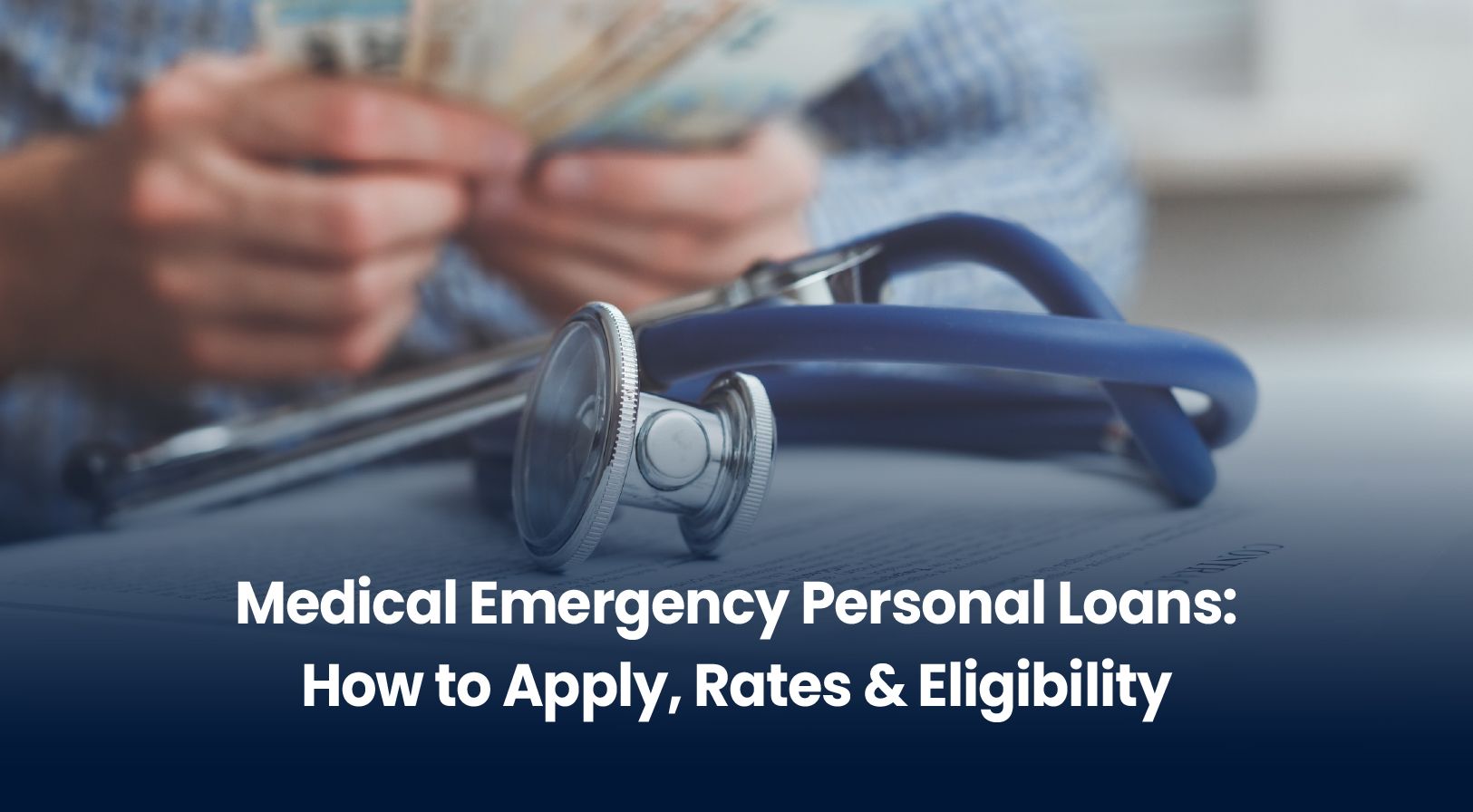
Introduction: Why Medical Emergency Personal Loans Matter.
Health emergencies don’t come with a warning. An unexpected hospitalization, surgery, an accident, or a critical disease can result in unexpected expenses running into lakhs. For a lot of Indians, especially those without health insurance or with inadequate savings, being able to handle such expenses is a very, very stressful experience.
In situations like these, personal loans for medical emergencies can help you get the finances you need – and fast! – often in as little as a few hours. With digital platforms for lending and NBFCs, there is no waiting for approval or delays in the paperwork. A loan can be disbursed quickly so that treatment doesn’t get delayed.
But to take advantage, you have to know how to apply, what kind of rates to expect, who is eligible and how to make your repayments manageable. That is just what this guide will demonstrate to you stepwise.
1. Medical-Emergency Personal Loan? What Is It?
A medical emergency personal loan is essentially the same as a regular unsecured personal loan except it is taken out with the intention of covering medical/health-related costs.
The reason why it is handled differently by most lenders:
- Hospital bills are urgent & Delay = Health Risk
- You may not have time to make arrangements to arrange for collateral or savings.
- You require flexibility in loan sums and rate of disbursement.
These loans usually have the following features:
- Faster approvals (at times, in minutes)
- Flexible loan amounts (from just a little bit of money to a large surgery)
- Less of an EMI Shorter tenor
- Complete digitized paperwork (especially with loan-apps like CreditMitra)
Because it is used for health, for many borrowers, this is one of the most meaningful ways to take advantage of credit.
2. When Should You Take Out a Medical Loan (and When Should You Not)?
You should consider it when:
- There’s an unexpected health crisis, and there’s no money left to pay for it or use insurance to pay for it
- You have to have money right now – hospital bed, operation, medicine.
- Don’t have a good health insurance cover or want an extra buffer.
- Delay may give rise to increased risk or medical complications.
- You can make timely payments for EMIs.
Avoid it when:
- The amount is small and can be managed through savings.
- You’re counting on a short-term interest-bearing loan with no repayment plan.
- Overusing loans to pay for regularly recurring medical costs (long-term cost becomes high).
- You do not have a stable income/repayment capability.
Use medical loans like a safety net – and not as a regular means of funding.
3. Criteria of Eligibility for Medical Emergency Personal Loans (2026)
But even for medical-specific loans, lenders check standard parameters. Here’s what most of the Bank/NBFCs expect:
- Age: 21 – 60 (some lenders may go up to 65)
- Income/Job Stability – either salaried or self-employed
- Salaried: fixed monthly pay.
- Self-employed: consistent and regular business revenues, which frequently require ITR/bank statements to support.
- Credit history / CIBIL score– preferably 650 and above; ideal score 700 and above.
- Existing Loan/EMI burden – low / manageable
- KYC Documents & Address Proof
- If self-employed, business proofs, ITR, Bank statements
- For salaried, salary slips/ bank statement with salary credits
Most NBFCs and digital-loan companies are more accommodating to medical loans, particularly with the applicant providing some evidence of a medical emergency (hospital bills, doctor’s estimate). At times, lenders may focus on priority on the basis of urgency, but still follow basic eligibility rules.
3. What Interest Rates and Costs to Expect:
Because medical loans are, for all intents and purposes, personal loans, you’ll receive interest charges comparable to those of standard personal loans. However, some lenders are slightly flexible with emergency purposes.
Typical Interest Rate Range
- Salaried / Good Credit: ~ 10.5% – 16% p.a.
- Self-Employed / Good but with a Score: 12-22% p.a.
- High-risk / Short-term NBFC Loan Apps: ~ 18% – 26% p.a.
Other Applicable Charges
- Processing fees (1% – 3% of the loan amount)
- Paper-based services fees (probably documentation or service fees).
- Late payment fees — important in case of EMIs delayed
- Prepayment/ foreclosure charges (depending on the lender)
What You Should Always Do
- Compare effective Interest rate + processing fee + total cost — not just head line rate.
- Check repayment date and EMI payment
- Avoid very high interest short-term loans if you can plan to repay the loan over a few years.
5. How to Apply for a Medical Emergency Loan: Step-by-Step Guide
Here’s a step-by-step process:
- Evaluate your need: Total Cost (Hospital + medicines + follow-ups).
- Confirm that you are eligible— Have your documents, income, and credit history ready.
- Open CreditMitra (or other app) – It will instantly find you a lender that you are eligible with.
- Upload KYC + income/business-related documents Aadhaar, PAN, Salary Slips/ITR, and bank statement.
- Request a loan quote/ Select a loan with the loan amount and tenure availability.
- Review offer — Interest rate, processing fee, foreclosure terms.
- Declare loan purpose (medical emergency) – helps for transparent evaluation of risk.
- Sign a loan agreement electronically – e-sign / digital consent is allowable.
- Get disbursal – Money sent directly to your bank account.
- Use of funds for medical bills Retain of bills/invoices for safety
Since medical emergencies are a matter of time, quick processing by digital lenders can make a real difference.
6. Advantages & Disadvantages of Medical Emergency Personal Loans
Pros
- Fast access to large funds – life-saving in an emergency.
- No collateral needed – no risk to the asset.
- Flexible amounts & tenures
- Helps in avoiding draining savings or assets
- If repaid on time, can build a good credit history
Cons
- Interest is added to the overall medical cost causes treatment to be more costly
- Risk of EMI Burden in case of unstable income
- High interest if the credit score is bad
- Over-borrowing threat – be tempted to spend more on other non-medical items.
- Stress of repayment during the recovery period
One must only borrow an amount that is critical to the threatment, not to be used in enhancing his/her lifestyle or in spending on unnecessary things.
7. Smart Tips While Using Medical Loans
- Borrow only necessary amount (hospital + medicines + expected follow up)
- Choose manageable EMI, better if EMI amount is 25-35% of the monthly income
- Choose a longer tenure when the amount is high to reduce EMI liability.
- Don’t confuse loan and credit card debts; make the payments different.
- Set up a repayment plan as soon as possible after the disbursement of loans
- Not to make prepayments or close the loan early if the loan has no prepayment penalty, which helps build credit history
- Keep medical bills & prescriptions as proof — need for audits or purpose of loans verification.
If you are following these, a medical loan can get you through — financially and physically.
8. When Medical Emergency Loan May Not be the Best Option
The personal loans may not be appropriate in the following situations:
- The amount required is small and can be handled through savings
- You already have several EMIs or are having a high debt burden
- Low stable or continually low income (high risk of default)
- You can’t estimate rehabilitation costs (Post-treatment follow up, meds, rehab)
- Interest rates offered are very high (> 26% p.a.), might lead to debt trap
In such cases, it’s better to see the possibility of:
- Health insurance
- Borrowing amongst themselves/friends.
- Employer medical advances
- Government medical schemes/ charitable trusts
9. Why you should use CreditMitra to get Medical Emergency Loan
CreditMitra comes in particular handy in emergencies because:
- Cut down time — eligibility check + documentation + disbursal done fast
- Promotion is transparent- Costs, EMI, interest finalize in front of your very eyes when you say officially.
- Aligns with salaried or certified as self-employed- extensive coverage.
- Helps you select the loan which suits your income profile – reducing risk of EMI failure
In an emergency situation where a medical emergency arises, time is of the essence. CreditMitra makes sure you don’t waste your time in, you get the right loan, fast.
10. Conclusion – Borrow Smart, Live Protected.
Health emergencies are not predictable. But financial preparedness can mean the difference between a state of peace of mind, or a state of financial stress. A medical-emergency personal loan – if used responsibly- may ensure treatment doesn’t get delayed. It provides you with breathing space, monetary flexibility, and dignity in times of crisis.
The reason is in the manner in which you borrow:
- Borrow only what you need
- Review the interest rate on fees carefully
- Make sure EMI is manageable
- Repay on time
- Budget carefully
When you need credit the most, now, with applications such as CreditMitra, you can gain access to credit, much smarter, more secure, and in a shorter time. Here’s to wishing you good health, money and good money choices always.
How to Get a Personal Loan Approved Fast in India (2026 Guide)
Credit Card Loan vs Personal Loan: Which Option Saves More Money?


