How to Use a Personal Loan for Debt Consolidation in India

Debt may silently sneak into your life – a credit card bill this time, a consumer loan that time, a purchase made with BNPL that you have forgotten, and before you realise, you are paying several EMIs with different interest rates and different due dates.
You are not alone, should this sound familiar to you. The same is a problem for lakhs of Indians, particularly with increased digital credit facilities.
A personal loan debt consolidation is one of the most intelligent measures to take back your finances. It makes paying simpler, your finances are less stressed and to some extent, the interest on money saved.
We are going to provide an exhaustive introduction to debt consolidation, the way to use the personal loan in it, why people should think of it, advantages, dangers, qualification, fees and a step-by-step procedure needed to begin it all in simple Indian terms.
1. Is Debt Consolidation?
Debt consolidation refers to taking a personal loan that is used to make one single EMI every month to group all the existing debts into one loan.
This EMI usually comes with:
- A lower interest rate
- A longer tenure option
- A less challenging payment timetable.
- Increased exposure and management of your debt.
The common debts that people consolidate are:
- Outstanding balances of credit cards.
- Buy Now Pay Later (BNPL) dues
- Consumer durable loans
- Small personal loans
- EMIs made out of medical bills.
- Friends or relatives lending to the business.
You do not need to deal with 5-7 payment options, and you make payments to only one lender.
2. The Rationale of Debt Consolidation with a Personal Loan?
Personal loans are the most appropriate financial instrumentforof debt consolidation since:
1. No Collateral Required
Personal loans are not secured, and there is no collateral.
2. Fixed Interest Rates
The EMI payments of personal loans are predictable, unlike credit cards that have an annual interest rate of 30-42 per cent.
3. Lower Interest Costs
Personal loans have a typical interest rate of 10-24 per cent compared to the credit cards that have a high-interest rate.
4. Longer Tenure Options
You have options such as repayment of 12 to 60 months, making EMIs affordable.
5. Simpler Financial Life
Only one EMI, one reminder, one lender – you know, it’s a lot less on your mind.
6. Improves Your Credit Score
Consolidation of debt through proper management and payment on time increases your CIBIL score.
3. Signs You Should Use Debt Consolidation
Consolidation of debts is the best option when:
- Your credit card outstanding is high.
- You lack in EMIs because of excessive debts.
- You are crushed by various paydays.
- The interest you pay is accruing more than the principal repayment.
- You have several little short-term loans.
- You do not want to pay late fines.
- You would like to have an improved credit status.
A consolidation loan will be able to save you both financially and emotionally in case two or more of the above apply to your situation.
4. Debt Consolidation: How Does a Personal Loan Work?
Here’s how the process works:
- You take the cumulative outstanding debts.
- You apply for a personal loan.
- After approval, the lender pays the entire amount of the loan to you.
- You pay all the debts that you have at once.
- You can now make a single EMI to the personal loan lender.
Easy, convenient, and organised.
5. How to Consolidate Debts with a Personal Loan- A step-by-step guide.
Step 1: Enumerate All Your Current Existing Debts.
Prepare a complete list:
- Lender name
- Outstanding amount
- Interest rate
- EMI date
- Late penalties
- Any foreclosure charges
This makes you know what you are dealing with.
Step 2: Determine the Amount of Payoff.
Add up all dues and include:
- Next unpaid credit card bill
- Pending EMIs
- Buy Now Pay Later payments
- Foreclosure charges (where necessary)
This provides you with the amount of loan you require.
Step 3: Check Your CIBIL Score
A higher score (700+) gives you:
- Lower interest rates
- Higher approval chances
- Better loan terms
When the score is lower, you can still receive a loan, probably a higher interest rate.
Step 4: Shopping for interest rates amongst Lenders.
Look for lenders with:
- Lowest interest rate
- No hidden charges
- Low processing fees
- Flexible tenure
This step is made easier because platforms such as CreditMitra display offers of different lenders that are regulated by the RBI in real-time.
Step 5: Personal Loan Application.
Most lenders offer:
- Digital KYC
- Instant approval
- Fast disbursal
- Submit:
- Aadhaar
- PAN
- Income proof
- Bank statements
Step 6: Payback All Your Debts at Once.
Do not spend the money on a loan on anything.
Settle all the outstanding dues individually.
Step 7: Monitor Your New EMI and Marvel.
Once you consolidate, your financial life becomes very easy.
Put reminders or auto-debit so as not to miss payments.
6. Advantages of a Personal Loan to Consolidate Debt.
Reduced Interest Burden
A personal loan with 12-15% interest will save thousands of dollars per month compared to maintaining a 30-40 per cent credit card interest.
Lower Monthly EMIs
The longer term translates into a much cheaper EMI.
Easy-to-Manage Finances
One EMI = reduced confusion + reduced opportunities of missed payments.
Boosts Credit Score
Your score goes up when you settle high-risk revolving debt and make regular EMIs.
Reduces Mental Stress
Monetary mess is a contributive factor to anxiety.
By consolidation, the pressure is eliminated.
Helps Break the Debt Cycle
Credit cards get you into accruing balances.
A personal loan provides you with an ordered, systematic payoff route.
7. Consolidation Pre-Consolidation Risks and Things to Consider.
Debt repayment is very helpfu;, however, note the following:
Total cost may still be high
In case your interest rate is not very low, then the consolidation will not be of much help.
It is not worth running up credit cards again.
The largest error that individuals commit is wiping their cards.
and then using them again.
Processing fees & charges
Personal loans come with:
- Processing fees
- Foreclosure charges
- Late fees
Compare lenders carefully.
The longer the term, the bigger the cumulative interest.
Reduced EMI could be attractive, but paying more interest over a long period adds to the overall interest.
Needs budgetary restraint.
You are required to be on the repayment scheme.
8. Eligibility Requirement of a Debt Consolidation Personal Loan
The eligibility will depend on the lender; however, the general requirements are:
- Age: 21–60 years
- Employment: Self-employed or Salaried.
- Minimum monthly income: ₹15 000- 25,000. Income: variable.
- CIBIL Score: Ideally 700+, though there are loans with NBFCs that give loans to 600+.
- Bank History: Stable Account Activity.
- Debt-to-income ratio: Not to be excessive.
The NBFCs that are under the help of the Reserve Bank of India are more accommodating compared to conventional banks.
9. Documents Required
Most lenders ask for:
- Aadhaar
- PAN
- Salary slips (in case of a salary applicant)
- Bank statements (3–6 months)
- ITR or GST (for self-employed)
- Address proof
- Passport photo
This submission is paperless and fast with the assistance of digital applications.
10. When should Debt Consolidation not be a Good Idea?
Avoid consolidation if:
- You are not in control of your credit card usage.
- Your current average interest rate on loans is lower than the new loan interest rate.
- The size of your debt is very small.
- You have a few loans in the offing that you are nearly finishing.
- You are borrowing the money just to ease the situation temporarily.
Better solutions can involve in such cases:
- Increasing EMI amounts
- Negotiating with lenders
- Balance transfers
- Limiting card usage
11. The Hint to successful consolidation of Indian debt
Select the lender whose interest and charges are low.
It is not just interest, but there are check processing and foreclosure fees as well.
Do not get into more debt than necessary.
Just take the necessary sum to settle your debts.
Lock your credit cards out.
At least until your financial situation is at peace.
Set up auto-debit
EMIs that were missed can reinstate the problem.
Track your expenses
Use budgeting software or Excel sheets.
Repayment of the loan Consolidation loan, will not involve new loans.
Holdan emergency fund- at least 3-6 months.
This will avoid EMI delays when losing employment or medical crises.
12. Advantages of taking a Debt Consolidation Loan with CreditMitra.
Digital first, CreditMitra, makes it easy to consolidate your debts with:
- One-minute eligibility test.
- Proposals of reputed RBI-regulated NBFCs.
- Minimal documentation
- Instant approval
- Transparent charges
- Fast pay right to your bank.
Help to select the most appropriate rate for your profile.
This implies that you do not need to run around the banks consolidating debt.
13. Summing up: Is it a Good Idea to consolidate debts with a personal loan?
The short answer:
Yes, but when you have several high-interest debts that you need to repay in a structured, manageable manner.
Debt consolidation:
- Reduces your monetary liability.
- Helps you regain control
- Reduces stress
- Improves your credit score
- Provides you with a definite payoff schedule.
That is, however, only in case you remain disciplined and do not incur new useless debts. Debt consolidation can be a life-saving move when put into proper use, and you can regain the financial stability and confidence needed to be back on your feet.
How to Get a Personal Loan Approved Fast in India (2026 Guide)
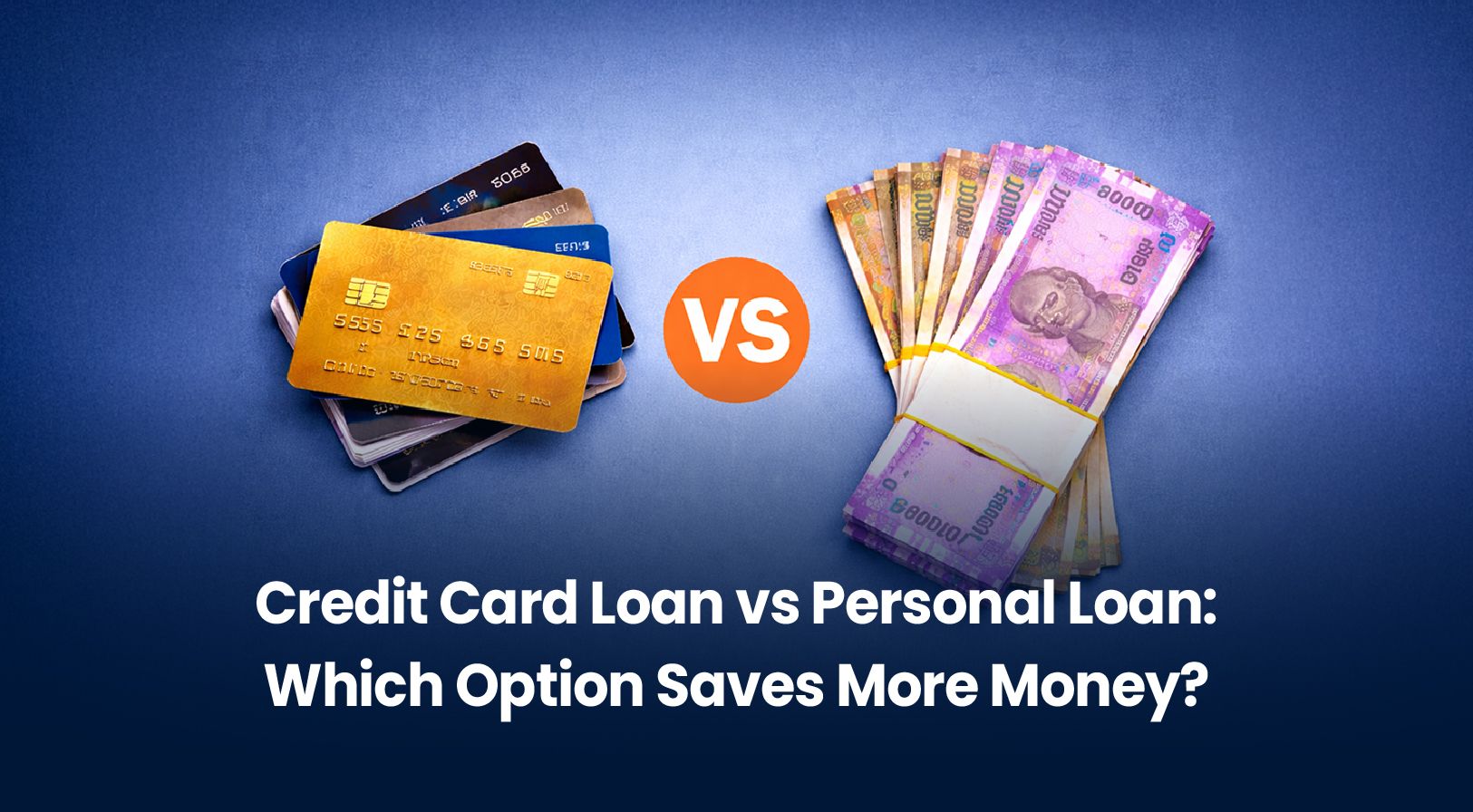
Credit Card Loan vs Personal Loan: Which Option Saves More Money?


