Free Credit Report Explained- What Does it Tell You & Why Should You Check it Regularly?
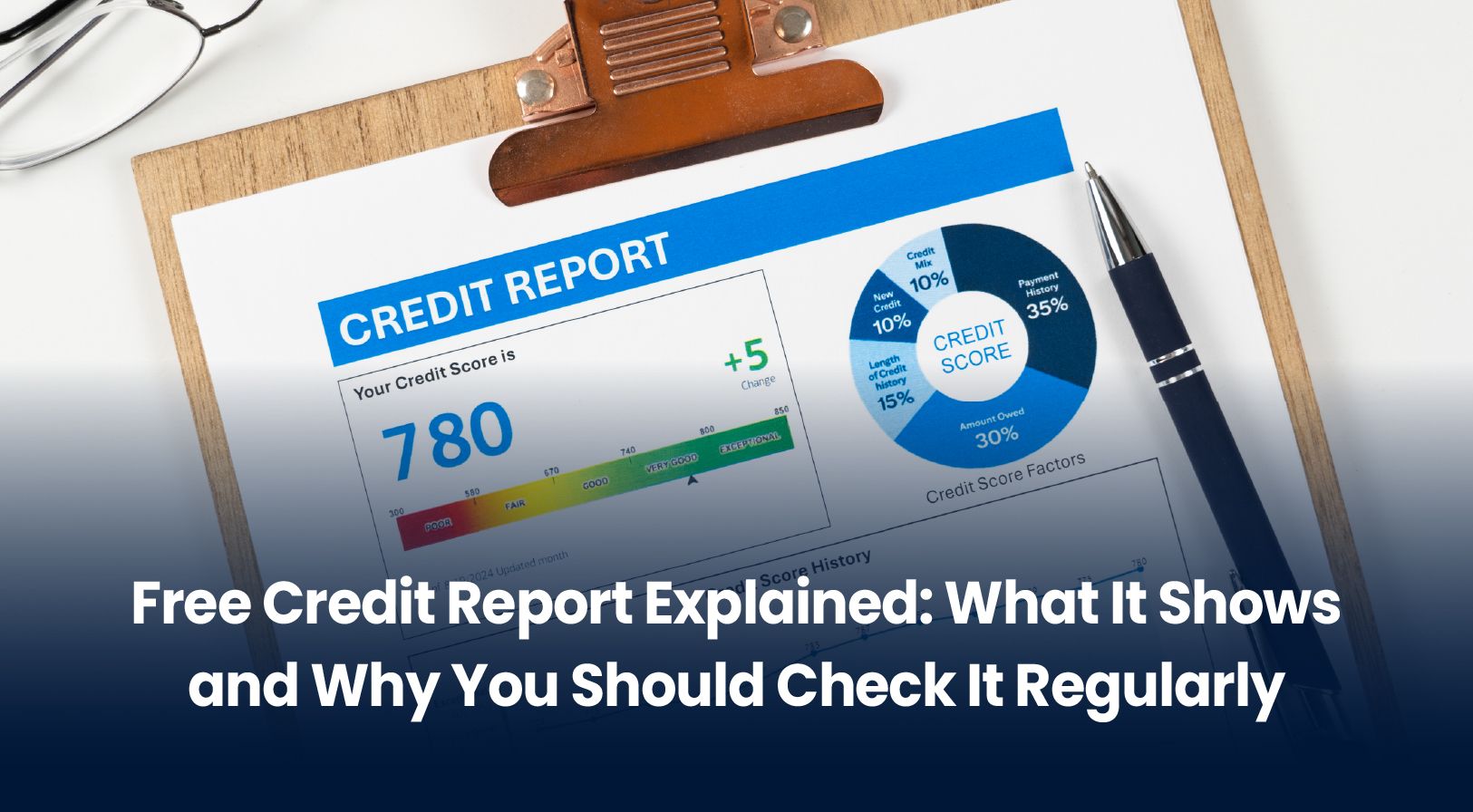
While most people understand the importance of checking their credit score, far fewer truly understand how to read their credit report. This gap in knowledge is often the inception of many financial mistakes.
Your credit score is just a number. Your credit report, on the other hand, tells the full story about your credit history explaining how you’ve handled loans, credit cards, EMIs. It captures all your repayments, and all your mistakes of the past in your repayments. If your credit score is the headline, your credit report is the entire article.
The good news? You can now access a free credit report online in minutes, without any paperwork or charges. And doing this regularly can save you from loan rejections, higher interest rates, and unpleasant surprises when you need credit the most.
In this guide, we’ll explain what a free credit report actually shows, why it matters, how to check your credit report for free, and how often you should review it.
What Is a Credit Report?
A credit report contains an individual’s performance on the respective credit instruments which they have subscribed to. In India, these records are maintained and updated by only the authorized bureaus namely Cibil TransUnion, Experian, Equifax, and CRIF High Mark.
It includes information relating to:
- Loans and credit cards that you have taken
- Your repayment behaviour
- Outstanding balances
- Past defaults or delays
- Credit Enquiries made by lenders
Lenders heavily rely on your credit report to make decisions on whether you are financially disciplined or not. Even a minor mistake or payment on loans that was recorded here can affect loan decisions, both positively or negatively.
That’s why it becomes equally important to understand your credit report as it is important to understand your credit score.
Credit Report vs Credit Score What’s the Difference?
Though these terms are used interchangeably, they are as different as chalk and cheese. Let us explain this to you in a more detailed manner.
Credit score:
It is a 3 digit number that summarises your creditworthiness. It typically ranges from 300 to 900
Credit report:
It is an elaborate summary of all your credit instruments you have subscribed to . It will capture all your repayments, missed repayments, duration till the repayment was not cleared, and any negative report of why your score is what it is.
The information available in your credit report is taken to calculate your credit score. If there are errors or negative entries in your report, it will affect your score.
Checking only your score without going through your report is like checking your result of an exam without seeing where you lost the marks.
You’ve Got a Free Credit Report, So What Does It Reveal?
When you access a credit report that is free of charge, the types of information you will see include:
Personal Information: This typically includes:
Your name
Date of birth
PAN number
Address details
While this section does not in any way affect your score, incorrect details may lead to mismatches and delays while loan approvals are being made.
Credit Account Summary
This section lists all your credit accounts including:
- Personal loans
- Home loans
- Auto loans
- Credit cards
- Consumer durable loans
For each account, you’ll see:
- Lender name
- Loan amount or credit limit
- Existing outstanding balance
- Status of account (active, closed or settled)
This makes lenders know the extent to which you have already taken credit and the discipline with which you are operating the credit.
Repayment History
This is one of the most important sections.
It shows your month-on-month repayment behaviour . Whether you made payments on time, whether you made payments late or missed payments. Even the single late-payment can remain on your credit as well for years.
Satisfactory on-time payment develops trust. Payment made irregularly raises red flags.
Credit Utilisation
For credit cards your report indicates how much of your available substance you’re using.
High utilisation (particularly of more than 40-50%) can have a negative effect on your credit profile, even if you’re paying on time.
Credit Enquiries
This section includes all the times your credit report was checked by lenders when you made an application for a loan or credit card.
Too many enquiries in a short period is suggestive of credit hungry behaviour and can lower your score slightly.
Negative Remarks (If Any)
This includes:
- Defaults
- Settlements
- Write-offs
These entries have a big impact on your creditworthiness and should be taken care of carefully.
Can You Really Cheque Your Credit Report for Free?
Yes, you can.
Thanks to the digital platforms and RBI guidelines, consumers living in India can now check their credit report, for free, once or more per year depending on the platform.
A free credit report online allows you to have the full visibility into your credit profile without any cost or obligation.
Importantly, checking your own credit report is considered a soft inquiry which means it will not affect your credit score.
How to Check Free Online Your Credit Report
The process is simple and easy on a digital-first platform such as CreditMitra:
Step 1: Enter Basic Details
You’ll need to provide:
- Your full name
- PAN number
- Mobile number
- Date of birth
These details help to get your report in an accurate manner from credit bureaus.
Step 2: OTP Verification
An OTP is sent to your registered mobile number so that you can have secure access.
Step 3: Get a Hold of Your Credit Report
Once verified, instantly your credit report is available – no paperwork, no waiting.
You can take a look at key insight, active accounts, behaviour of repayments and credit health to carry on with essential needs in one single spot.
Why You Should Cheque Your Credit Report Regularly
Many people only check their credit report when they are rejected from a loan. By then, it’s often too late.
Checking your credit report frequently can assist you with the following:
- Spot Errors Early
Incorrect loans transactions, outdated savings or balances or accounts that do not belong to you can drag your score down unnecessarily.
These errors are more common than people realise – and it is only you who can flag them up.
- Protect Yourself from Fraud
If anyone uses your PAN without your knowledge to avail loan or credit card, it will appear in your credit report also.
Regular monitoring is 1 way of catching fraud early on, before serious damage is done.
- Improve Loan Eligibility
Let’s know what lenders see in order to improve upon weak areas before you apply for credit.
This allows for better probabilities of approval to be taken and introduces an advantage to bargain for better terms.
- Keep Track of Your Finances.
A credit report is like a reflection of your personal habits of money use.
As you pay off loans and pay down balances and are responsible with your credit, you will be able to see the improvement over time.
How Often Should You Cheque Your Credit Report?
Ideally though, you should check out your credit report :
- at least once every 6 months
- Before asking for a major loan application
- Once closing a loan or credit card
- If you see some suspicious activities or you get a call that you did not expect from lenders
Since it is free, and it doesn’t affect your score, there is no downside to being informed.
Common Myths Pertaining to Free Credit Reports
Checking my credit report will lower my score”
False. Self-checks are of the soft inquiring types and doesn’t affect your score.
“Only people who have loans need a credit report”
Even first time borrowers should track their report to establish a strong credit history.
“A low score means I’m not financially responsible”
Not always. Sometimes its scores are low because of lack of history or old errors that can be corrected.
What to Do If You Are in Error of Credit Report
If something does not have the correct appearance:
Identify the specific error
Proceed to dispute the credit bureau
Supply supporting documents, if needed
Track the resolution
Righting wrongs can largely help your credit profile positively over the years.
Why CreditMitra Makes Credit Report Easy to Understanding
CreditMitra is made for people who want to be able to understand- not be confused by confusing financial jargon.
With CreditMitra, you get:
Free credit report online
Easy-to-understand summaries
Safe dealing with personal data
Not raw numbers, but actionable insights.
A user centric sold designed for Indian borrowers
Whether you are planning a loan or would like to just be financially aware, CreditMitra helps you in take charge of your credit health.
Final Thoughts
Your credit report doesn’t just make sense to keep track of it-your credit report is a financial record that trails you for years on end.
Ignoring it does not make problems go away. Understanding it, going through it periodically and getting it fixed at mistakes places you in control.
A free credit report allows you to have the transparency, confidence, and ability to make better financial decisions.
If you have not gone over yours, take a few minutes today to check your credit report and it’s free to do! It is a step that can be taken today that will lead you to a big step tomorrow.

How to Get a Personal Loan Approved Fast in India (2026 Guide)
Credit Card Loan vs Personal Loan: Which Option Saves More Money?


