Free CIBIL Report: How to Read and Understand Your Credit Details
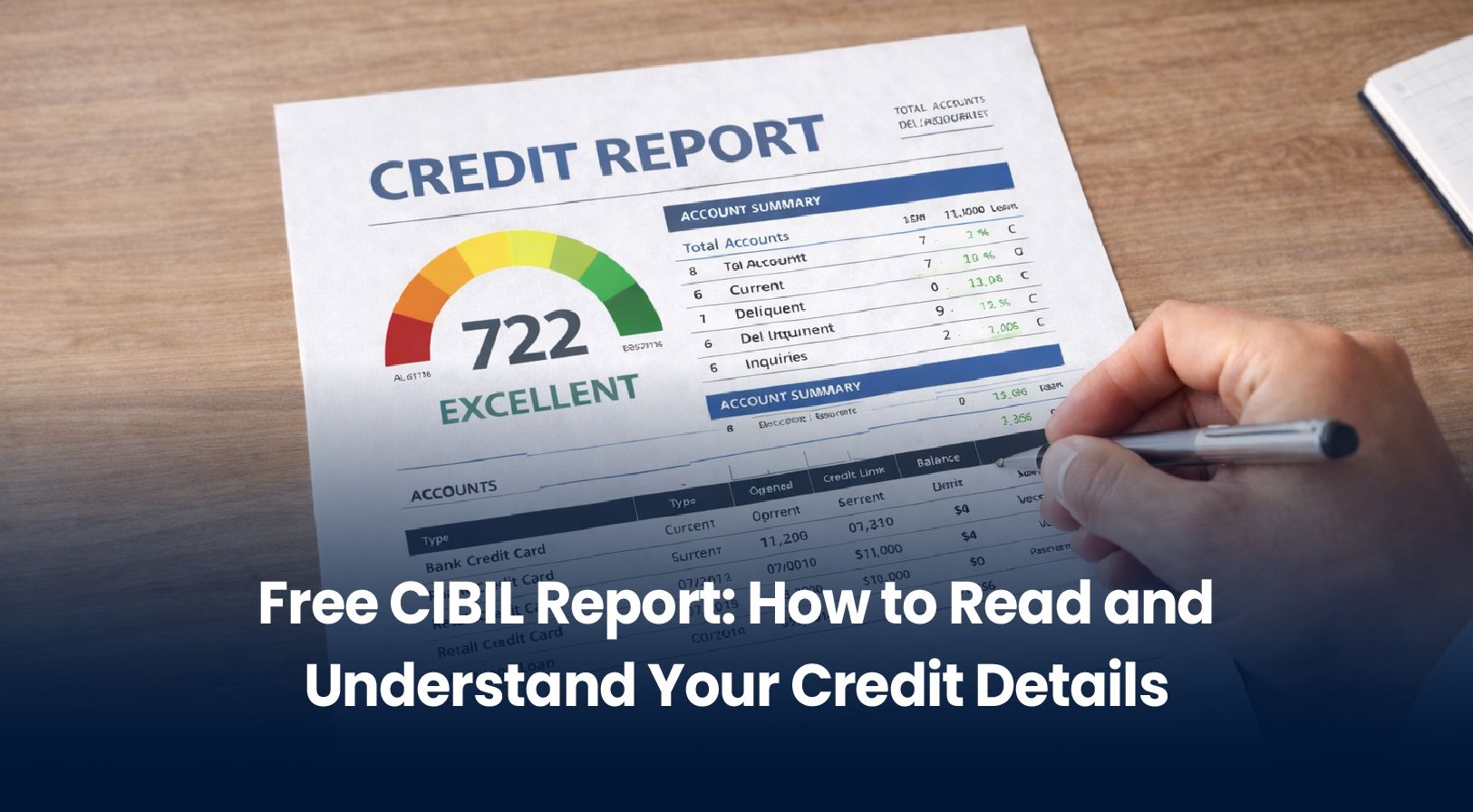
How do most of the individuals check their credit reputation ? They will check their CIBIL score which is a 3 digit number, have a glance at it, and just move on.
But they miss the fact that this is not the complete picture . There is more to it.
It’s your CIBIL report, and not the cibil score, where the real story lies. It is the credit report which explains why your score is high or low. The lenders actually see this report when they evaluate your loan application, and which parts of your financial behaviour are helping or hurting you.
The best part is that you can now access your free CIBIL report online, and more importantly, learn how to read and understand it without needing a finance background.
By this blog, CreditMitra is trying to break down your CIBIL report, section by section, explaining what each part means, and showing you how to use this information to make better credit decisions.
What Is a CIBIL Report?
A CIBIL report is a record of your credit history which is maintained by TransUnion CIBIL, India’s most widely used credit bureau.
It includes:
- Your personal and identification details
- A list of all loans and credit cards
- Your repayment history over time
- Outstanding balances and credit limits
- Credit enquiries made by lenders
- Any negative remarks such as defaults or settlements
Your CIBIL score is calculated using the data in this report. If the report has issues, the score reflects them.
Hence, understanding your CIBIL report, which can be accessed free for free, is just as important as checking the score itself.
CIBIL Report vs CIBIL Score: Why Reading the Report Matters
Your CIBIL score is a three-digit number whereas your CIBIL report is the full explanation.
Two people may have the same score for very different reasons:
- One may have high credit utilisation
- Another may have missed payments in the past
- A third may have limited credit history
Lenders don’t rely only on the score—they review the report to assess risk. Learning how to read a CIBIL report gives you the same visibility lenders have.
How to Access Your Free CIBIL Report
Your CIBIL report can be accessed online and without any charges through digital platforms like CreditMitra.
The process is simple:
- Fill in all your basic details such as PAN Number, your date of birth, and mobile number.
- Verify your identity using OTP
- View and download your CIBIL report instantly
Checking your own report is a soft inquiry and does not reduce your score.
How to Read Your CIBIL Report: Section-by-Section Explanation
Let’s break down each part of your CIBIL report in simple terms.
1. Personal Information Section
This section contains:
- Your full name
- Date of birth
- PAN number
- Address details
Why this matters:
While this information has no major effect on CIBIL score directly, however any errors or mismatch here can cause a problem during loan approvals. A mismatch in name or PAN details may delay or even get your application rejected.
What to check:
You need to ensure all your personal details are accurate and up to date.
2. CIBIL Score Overview
Your CIBIL score will appear at the top of your credit report, usually ranging from 300 to 900.
General interpretation:
- 750 and above: Excellent
- 700–749: Good
- 650–699: Fair
- Below 650: Needs improvement
This score is calculated based on your repayment behaviour, credit usage, credit history length, and enquiry patterns.
3. Credit Account Information (Loans & Credit Cards)
This is one of the most important sections of your CIBIL report.
It lists all your credit accounts, including:
- Personal Loans
- Home Loans
- Auto Loans
- Education Loan
- Credit Cards
- Consumer Durable Loans
For each account, you’ll see:
- Lender name
- Type of credit
- Loan amount or credit limit
- Outstanding balance
- Account status (active, closed, settled)
Why it matters:
All the lending institutions evaluate your credit report and check how many active loans you have and whether you’re managing them responsibly.
What to watch for:
- Loans that should be closed but show as active
- Unknown accounts that don’t belong to you
- Settled accounts, which negatively impact creditworthiness
4. Repayment History (Payment Behaviour)
This section shows your month by month re-payment history.
You will find the following indicators such as:
- On-time payments
- Delayed payments
- Missed payments
- Defaults
Even a single missed monthly payment or a delayed payment can stay on your CIBIL report for years.
Why it matters:
Repayment behaviour impacts on your CIBIL score the most, either positively or negatively . A regular and on time payment builds trust with lenders.
What to check:
Carefully observe for any incorrect late payment marked in your credit score and ensure your payment behaviour is accurately reflected.
5. Credit Utilisation Details
For credit cards, your report shows:
- Total credit limit
- Current outstanding balance
- Percentage of credit used
High credit utilisation—especially above 40–50%—can negatively impact your credit profile, even if you pay on time.
Why it matters:
Lenders see high utilisation as a sign of financial dependency on credit.
Tip:
Keeping utilisation below 30% is generally considered healthy.
6. Credit Enquiries Section
This section lists all the times lenders checked your CIBIL report when you applied for credit.
It includes:
- Lender name
- Date of enquiry
- Type of credit applied for
Why it matters:
Too many enquiries within a short span of time indicates that you are credit hungry and may slightly affect your credit score.
What to watch for:
At all times ensure you are not applying for multiple loans or credit card applications simultaneously.
7. Remarks and Negative Information
If applicable, this section highlights:
- Defaults
- Settlements
- Write-offs
Such remarks in your credit report will significantly affect your creditworthiness and are closely scrutinised by lenders.
Why it matters:
A “settled” status is viewed less favourably than a “closed” account paid in full.
Common Mistakes People Make While Reading Their CIBIL Report
- Focusing only on the score and ignoring the report details
- Assuming old errors don’t matter anymore
- Ignoring settled accounts
- Not disputing incorrect information
Educating yourself on how to read your CIBIL report will help you avoid these mistakes and will enable yourself for adverse situations.
What to Do If You Find Errors in Your CIBIL Report
If you notice incorrect information:
- Determine all the errors present in your report.
- Highlight the errors to the credit bureau by raising a dispute with them.
- Support your dispute with all the supporting documents ,if required.
- Track the resolution
Getting these errors rectified will have a positive impact on your bureau score and can improve your credit profile over time.
How Often Should You Check Your CIBIL Report?
A good practice is to review your free CIBIL report:
- Every 6 months you should check your free cibil report.
- Prior to applying for a loan or credit card.
- After closing a loan or clearing dues.
- In case if your suspect fraud or identity misuse
Regular checks help you stay financially prepared.
Why Understanding Your CIBIL Report Matters Before a Loan
Before a loan application is getting approved, the lenders would look beyond the credit score. They assess:
- Repayment consistency
- Existing debt burden
- Credit utilisation habits
- Past financial discipline
Understanding your report allows you to fix weak areas before applying, increasing approval chances and improving loan terms.
Why Use CreditMitra to Access and Understand Your CIBIL Report?
CreditMitra is designed to make credit simple and transparent for Indian users.
With CreditMitra, you get:
- Free CIBIL report online
- Clear, simplified explanations
- Secure handling of your personal data
- Insights that help you take action—not just view numbers
- A digital-first experience with no paperwork
Whether you’re planning a loan or just staying financially aware, CreditMitra helps you stay in control.
Final Thoughts
You should not hesitate in checking your CIBIL report and should not sway away from it,rather you should work towards understanding it.
Downloading and analysing a free CIBIL report and learning how to read it will not only give you clarity, confidence, and control over your financial future but will also prepare you for tough situations. It helps you correct mistakes, improve habits, and prepare better for credit opportunities.
If you haven’t reviewed your CIBIL report recently, now is the perfect time to do it. A few minutes today can make a big difference tomorrow.

How to Get a Personal Loan Approved Fast in India (2026 Guide)
Credit Card Loan vs Personal Loan: Which Option Saves More Money?


